
Why Dubai's Growth Looks Structural, Not Hype
Beyond the Superlatives: Understanding Dubai's Long-Term Development Strategy
Dubai is frequently described in superlatives—tallest, biggest, newest. But when you examine capital allocation, regulation, talent pipelines, and economic outputs, a different picture emerges: sustainable, structural growth.
Sustainable vs. Hype Growth
In city economics, 'hype growth' concentrates around short time horizons: rapid price moves, headline projects without supporting systems, heavy dependence on one demand source, and weak enforcement.
'Sustainable growth' looks less exciting in the short run and more convincing in the long run. It shows up as a portfolio of mutually reinforcing investments:
A Diversified Economy in Numbers
Dubai's GDP composition shows economic breadth, not one-trick dependence
Dubai's economy is often misunderstood as 'oil and tourism.' In reality, oil accounts for less than 1% of Dubai's GDP (vs. 30%+ in Abu Dhabi). Tourism isn't a standalone sector—it's distributed across trade, transport, accommodation, and services. Here's what actually drives the economy:
GDP Composition by Sector (%)
Includes re-export trade (goods passing through Jebel Ali Port), domestic retail, and commercial services. Tourism spending flows through this sector.
Aviation (DXB: 92M passengers/year), port operations (Jebel Ali: 15.5M TEU), metro, logistics. This is Dubai's global connectivity engine.
DIFC with 900+ regulated entities, banking, wealth management, fintech. Growing 8.5% annually—not tied to property cycles.
Property transactions and rentals. Important but NOT the dominant sector. Growing 6.7%—healthy but not overheated.
Hotels, restaurants, hospitality. This is where 'tourism' appears as a GDP line item. Supported by 17M+ annual visitors.
Infrastructure buildout: metros, airports, ports, districts. Indicates expansion, not speculation.
Tech sector, digital economy, AI startups. Dubai Chamber supported 1,690 digital companies in 2025 (+39.7% YoY).
Aluminum, pharmaceuticals, food processing, automotive assembly. Growing industrial base in Dubai South and Jebel Ali.
Government, education, healthcare, professional services. The 'quality of life' infrastructure that supports permanent residents.
Debunking the Myths
Myth: Dubai lives on oil
Reality: Oil is less than 1% of Dubai's GDP. Abu Dhabi has the oil; Dubai built trade, logistics, finance, and services.
Myth: It's all tourism
Reality: Tourism contributes ~11-12% (accommodation + related services). It's significant but not dominant. The economy runs on trade, finance, and logistics.
Myth: If tourism drops, economy collapses
Reality: During COVID (2020-2021), tourism crashed 67%. Dubai's economy contracted only 6.2% and recovered within 18 months. Why? The trade, port, financial, and construction sectors kept running.
Myth: It's a ghost city—just empty buildings for speculation
Reality: Real estate is 8.2% of GDP. Dubai adds ~160,000-200,000 net new residents annually, driven by employment in finance, tech, logistics, and services. Construction delivers ~40,000 residential units per year to house this influx. Occupancy rates exceed 85%. Buildings get built because people are coming for jobs, not the reverse.
Population Growth & Planning
From 1990 to 2040: Strategic demographic expansion
*Projected based on Dubai 2040 Urban Master Plan
Infrastructure That Locks In Long-Term Demand
Multi-billion dollar bets on population, commerce, and connectivity
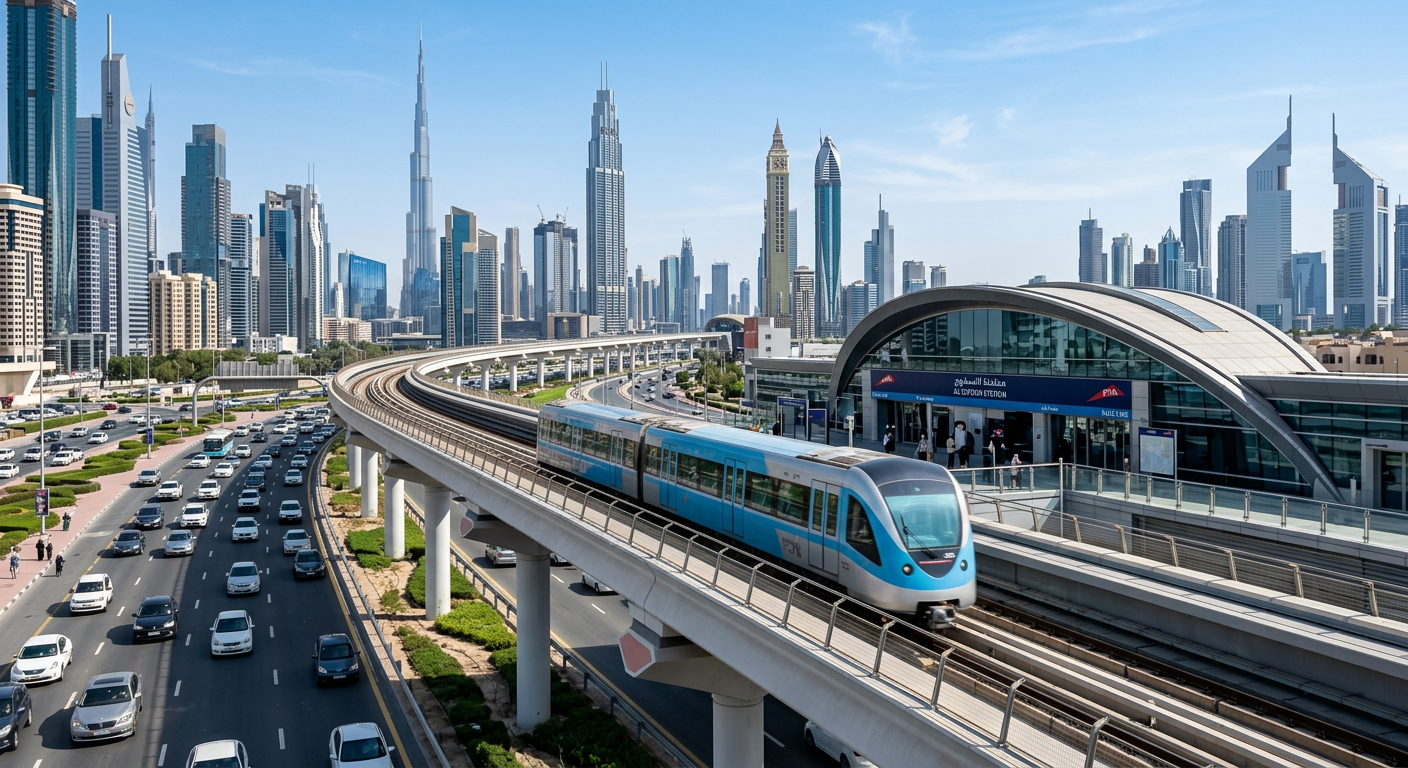
Dubai Metro Blue Line
2.5 billion passengers carried since launch. 275M in 2024 alone. 900,000 daily riders.
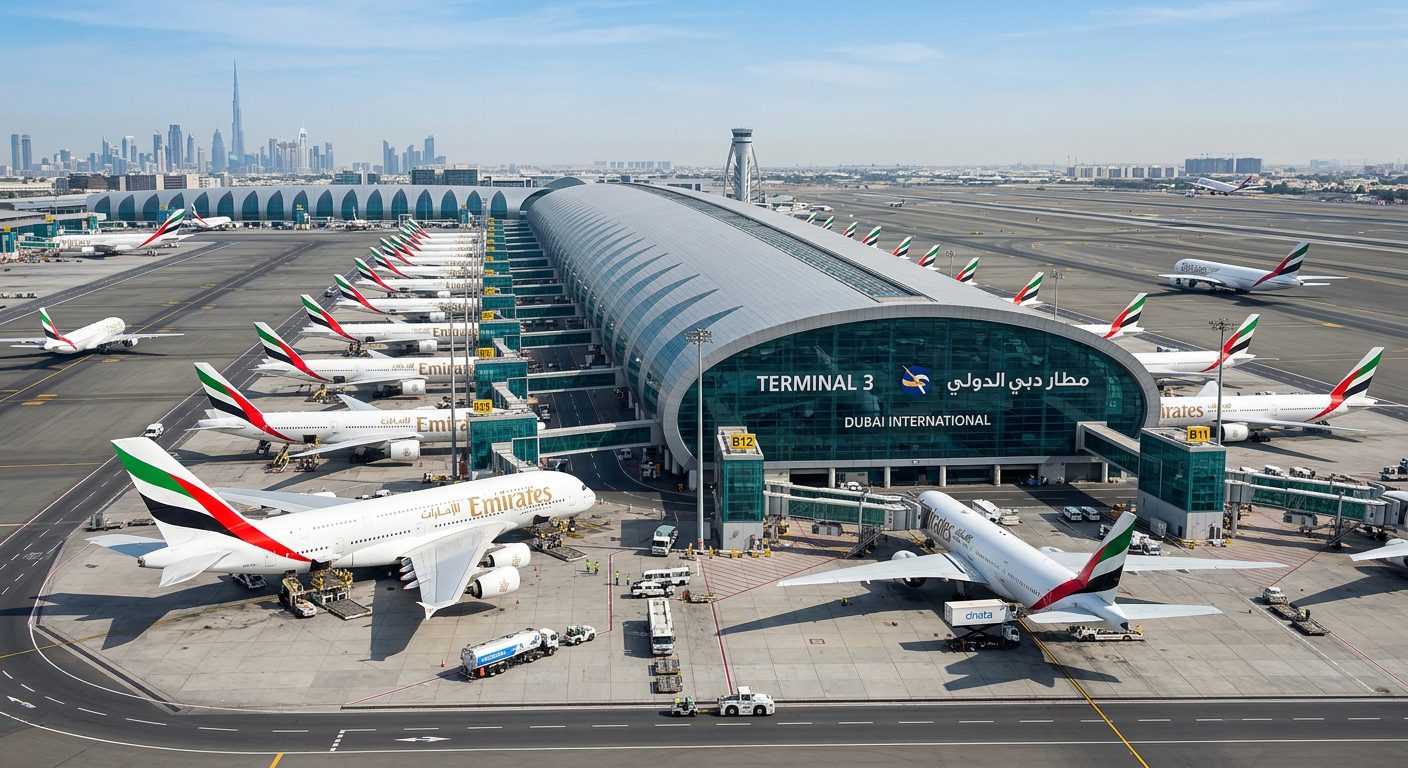
Al Maktoum International Airport
Planned as Dubai's new aviation hub with 12M tonnes cargo capacity annually.
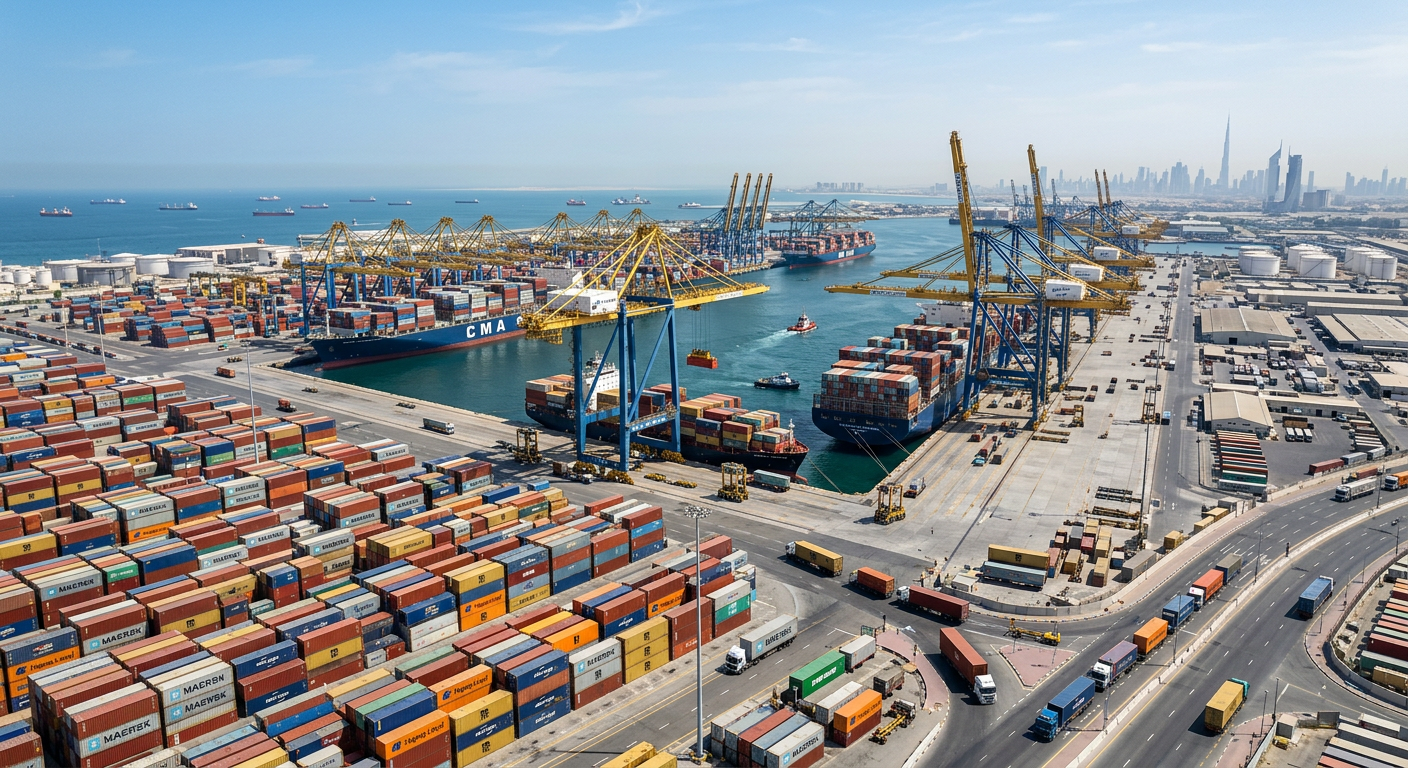
Jebel Ali Port & Free Zone
AED 713B in non-oil trade (2024). Major automotive logistics expansion underway.
Human Capital: The Settlement Test
Education capacity that supports permanent residency
Cities in speculative phases attract capital without building the 'settlement stack.' Dubai is doing the opposite: systematically expanding education capacity to support families who plan to stay long-term.
K-12 Schools: Scale and Diversity
Dubai's private school system offers every major international curriculum, making it one of the few cities globally where expatriate families can maintain educational continuity regardless of origin:
The Dubai 2033 Education Strategy targets expansion through new 'affordable high-quality' schools, capacity increases, and quality oversight—indicating that education planning is being treated as population infrastructure, not a private afterthought.
Higher Education: Building Knowledge Economy Capacity
Dubai International Academic City (DIAC)
Dedicated higher education free zone hosting 25+ universities and colleges, including branch campuses of international institutions.
Dubai Knowledge Park (DKP)
Focused on business, IT, and creative industries education. Part of the TECOM Group cluster supporting tech and innovation sectors.
Key Highlights:
Education capacity is slow to build, expensive to maintain, and demanded by residents who plan to stay. It's one of the clearest indicators that Dubai is scaling for permanence, not short-term hype.
Future Industries: Funded Platforms, Not Just Slogans
Budgets, governance, and measurable goals
The test of whether a city is building future-industry platforms is simple: Are there budgets, governance structures, and measurable employment targets—or just conferences and press releases? Dubai passes this test.
Dubai Silicon Oasis Expansion
District IO alone: AED 11B investment targeting tens of thousands of jobs by 2036. Focus: AI, robotics, smart mobility, semiconductors. Multi-year phased buildout with explicit GDP contribution targets.
Dubai AI Campus
Part of Dubai's AI strategy with governance framework. Targets hundreds of companies and thousands of jobs. Dubai Chamber supported 1,690 digital startups in 2025 (+39.7% YoY), with ~15% AI-focused.
DIFC FinTech & AI Hub
Dubai International Financial Centre houses hundreds of financial firms, growing AI cluster, and innovation accelerators. Supervised by independent regulator (DFSA). 2025: strong momentum in new firm registrations.
Dubai Future District
Emirates Towers district transformation into innovation hub for R&D, startups, and future-tech companies. Integrated with Museum of the Future as anchor institution.
Dubai CommerCity
2.1M sqm dedicated e-commerce and logistics hub in Dubai South. Targets regional distribution for global e-commerce players. Integrated with Al Maktoum Airport logistics corridor.

Market Hygiene & Transparency
Enforcement mechanisms that build trust
Escrow Protection
Regulated off-plan fundraising to protect investor rights and constrain reckless capital intake.
Advertising Controls
Permit requirements and QR-code verification. Public enforcement with fines for violations.
Data Transparency
Open data interfaces for transactions, rents, projects, and valuations reducing information asymmetry.
Quality of Life: Signaling Permanence
Investments that are not 'necessary' for short-term growth, but essential for long-term retention
One of the clearest signs that a city has moved beyond speculation is when it invests heavily in quality-of-life infrastructure that doesn't generate immediate returns but is essential for retaining residents and talent.
Dubai 2040 Urban Master Plan: Green Space Expansion
The plan targets 60% of Dubai's total emirate area as green spaces, nature reserves, and rural natural areas by 2040. This doesn't mean '60% parks in the city'—it includes:
This target shows Dubai is planning for environmental sustainability and liveability at scale—not just building towers. The master plan doubles green and recreational spaces accessible to residents.
What This Does (and Doesn't) Mean
These signals don't imply 'prices only go up,' nor do they remove macro risks. Dubai remains exposed to global travel cycles, trade conditions, and geopolitical shocks.
But the presence of multi-decade infrastructure commitments, published economic breadth, education capacity planning, and visible market enforcement differentiates a city with hype moments from a city building for permanence.
When you examine how Dubai allocates capital, regulates sectors, builds talent pipelines, and publishes measurable outputs—a clear picture emerges: this is structural scaling, not a pump cycle.